
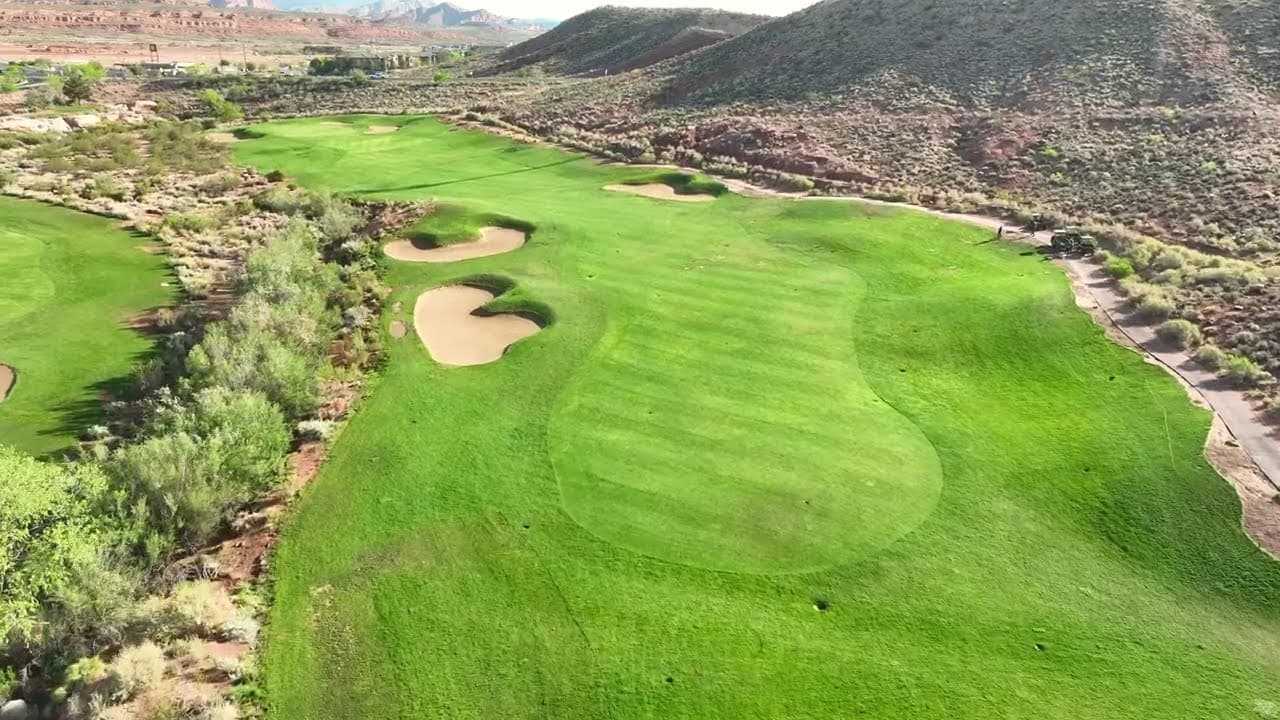
Planning a group golf trip sounds simple until you actually try it. Between coordinating schedules, picking courses everyone will enjoy, finding lodging that keeps the group together, and building an itinerary that balances golf with downtime — there are a lot of moving parts. This guide walks through every step, from the first group text to the final round, based on what we've learned booking trips for groups of 4 to 48 players across Mesquite and St. George.
Whether it's a buddies' weekend, a corporate outing, a bachelor party, or a family reunion, the principles are the same. Get the logistics right early, and everyone has a better trip.
Group Golf Trip Stats

Planning a group golf trip doesn't have to be complicated — the right destination and a solid game plan make everything easier.
Step 1: Set the Core Details First
Before you research courses or lodging, lock down three things with your group: approximate dates, trip length, and budget range. Everything else flows from these decisions. Trying to pick courses before you know whether the group wants to spend $150/day or $300/day per person wastes everyone's time.
Choosing Your Dates
Spring (March–May) and fall (September–November) are peak season for desert golf destinations like Mesquite and St. George. Tee times book faster and rates run higher. If your group has flexibility, shoulder seasons — early March or late November — give you the same courses at lower prices with easier availability. Winter golf in southern Utah and Nevada is still very playable, with daytime temps in the 50s–60s from December through February.
Trip Length Sweet Spot
Three to four days is the sweet spot for most groups. Shorter trips feel rushed — you travel, play one round, and leave. Longer trips see attendance drop off as people can't commit to five or six days away. A 4-day/3-night format gives you time for 5-7 rounds across multiple courses, a rest day or casino night, and enough downtime that nobody burns out.
💡 Pro Tip
Fly in a day early if possible. Groups that arrive the afternoon before Day 1 of golf are more relaxed, more rested, and less likely to miss their first tee time. Even a quick 9-hole round the evening before can shake off the travel rust.
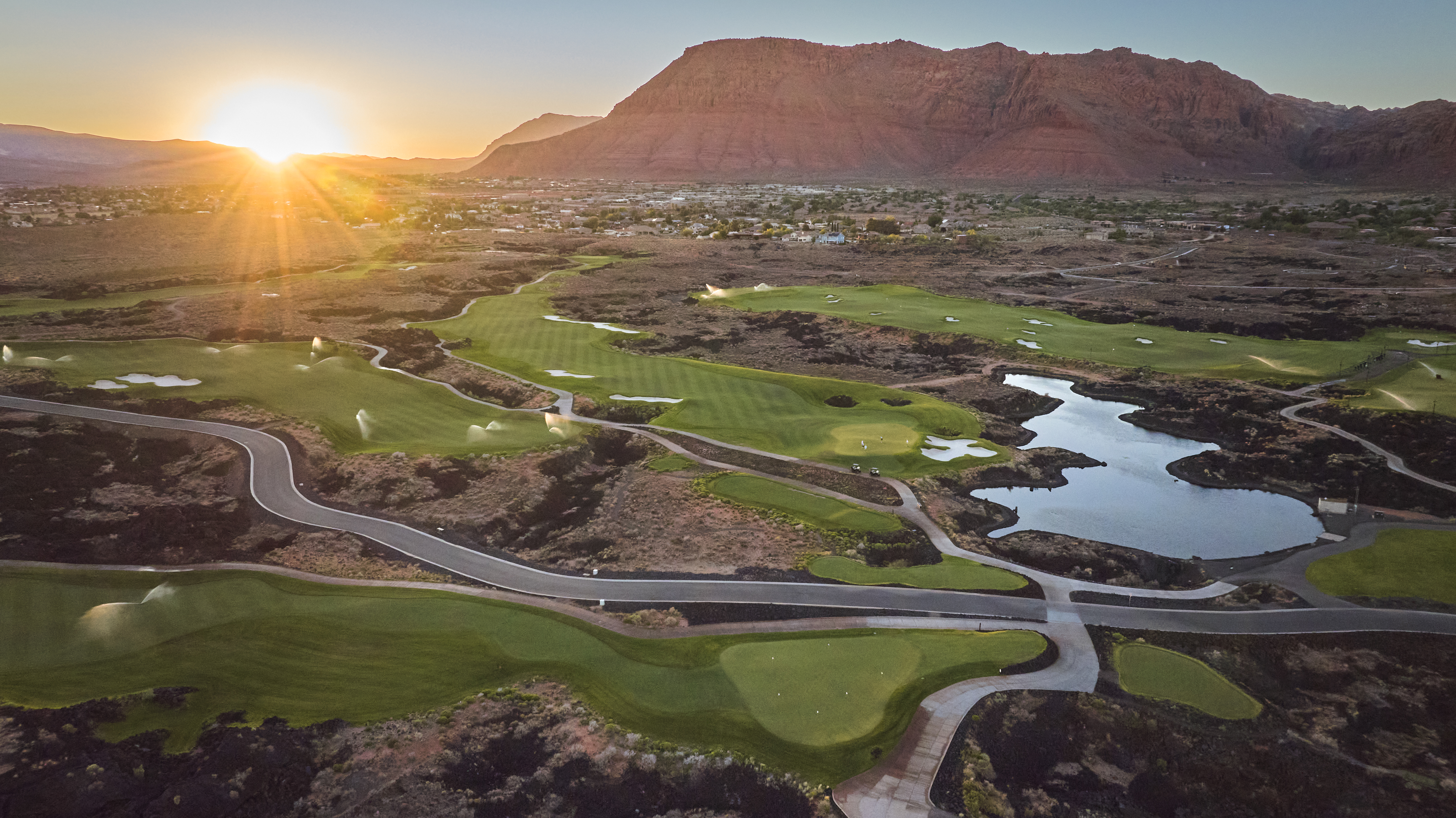
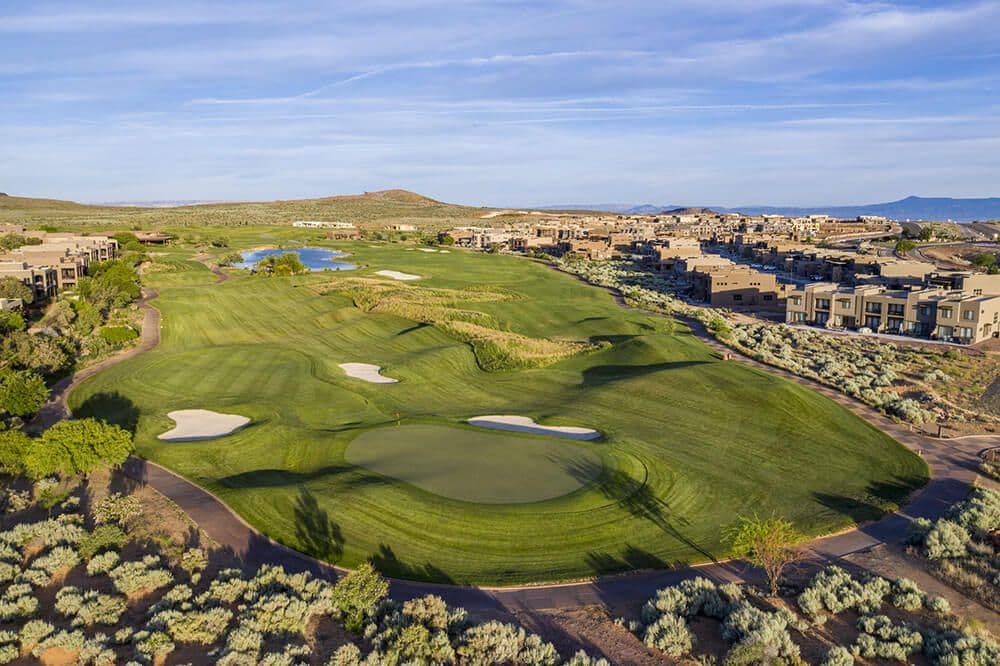
Mesquite and St. George offer 22 courses within a 90-minute radius — enough variety for any group size or skill mix.
Step 2: Pick Your Destination
The destination should match the group's priorities. Are you optimizing for course quality, nightlife, budget, or ease of travel? Here's how Mesquite and St. George compare to other popular group golf destinations:
| Factor | Mesquite, NV | St. George, UT | Scottsdale, AZ | Myrtle Beach, SC |
|---|---|---|---|---|
| Courses | 9 courses | 13 courses | 200+ courses | 80+ courses |
| Avg Green Fee | $55–$140 | $45–$195 | $80–$350 | $40–$150 |
| Group Lodging | Golf mansions (up to 24) | 125+ vacation rentals | Hotels primarily | Condos/hotels |
| From Vegas | 80 min drive | 2 hr drive | 5 hr drive / flight | Flight only |
| Nightlife | Casino resort | Dining/parks | Old Town bars | Beach bars |
| Best For | Casino + golf groups | Families, scenic golf | Big budgets | East coast groups |
Step 3: Choose Your Lodging Strategy
Lodging is where group trips either come together or fall apart. The key decision: do you stay together under one roof or spread across hotel rooms? For groups of 8 or more, vacation rentals and golf mansions almost always win on both cost and experience.
Hotels vs. Vacation Rentals for Groups
Hotels give you individual rooms with housekeeping and front desk convenience. But for groups, hotel lobbies are not great gathering spots, and coordinating departures across 6-10 separate rooms adds friction every morning. Vacation rentals give you a shared living room, a full kitchen for breakfast and late-night food, a patio or pool for post-round hangouts, and a single address everyone navigates to.
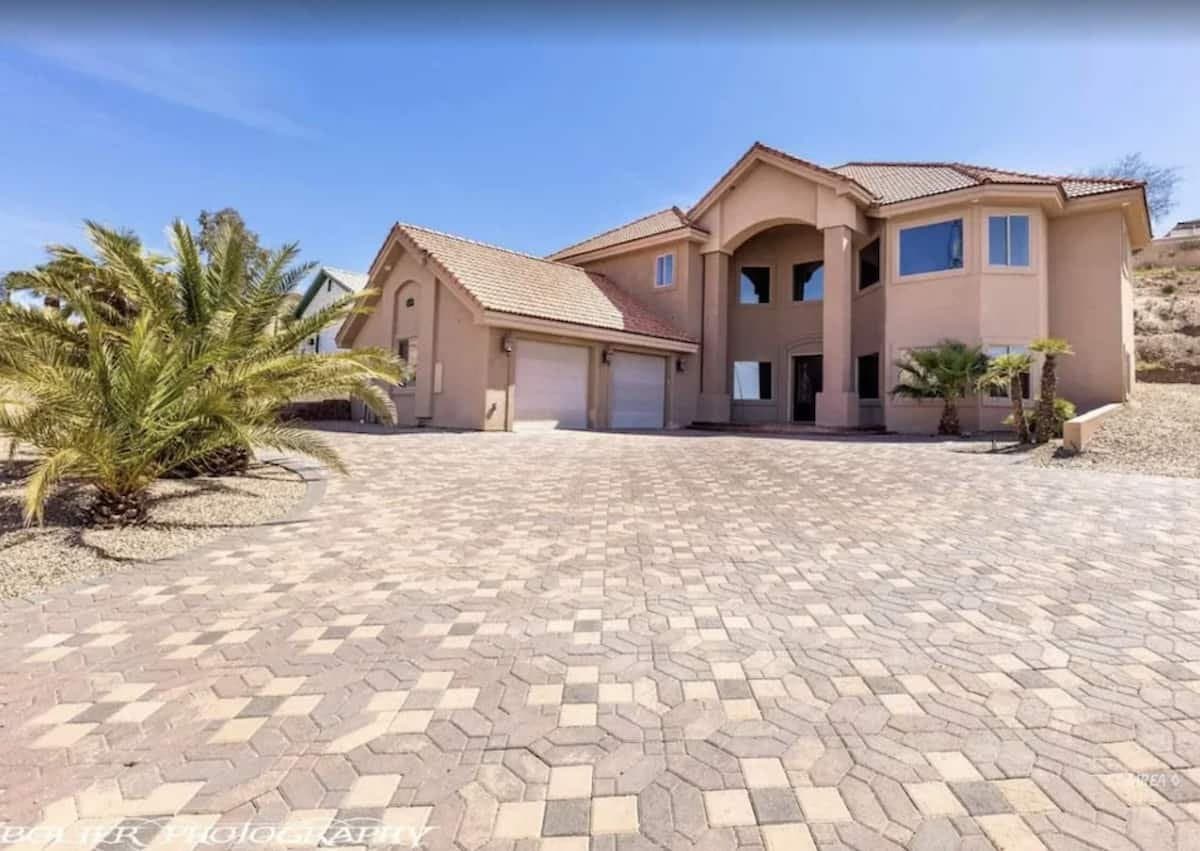
In Mesquite, the golf mansions at the Conestoga course sleep up to 24 guests with private pools, putting greens, and Wolf Creek views. In St. George, there are over 125 vacation rentals across 22 communities — many within walking distance of courses like Sand Hollow, Entrada, and The Ledges.
💡 Pro Tip
For large groups (16+), book two adjacent rentals instead of one huge house. This gives you a "quiet house" and a "party house" — everyone stays close but the early-to-bed golfers don't get kept up by the poker game.
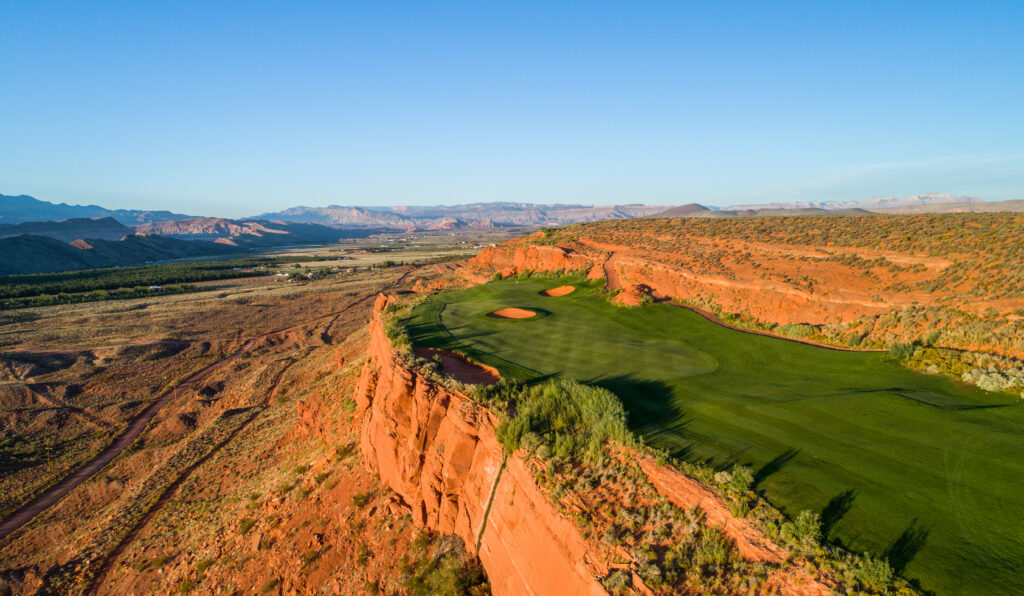
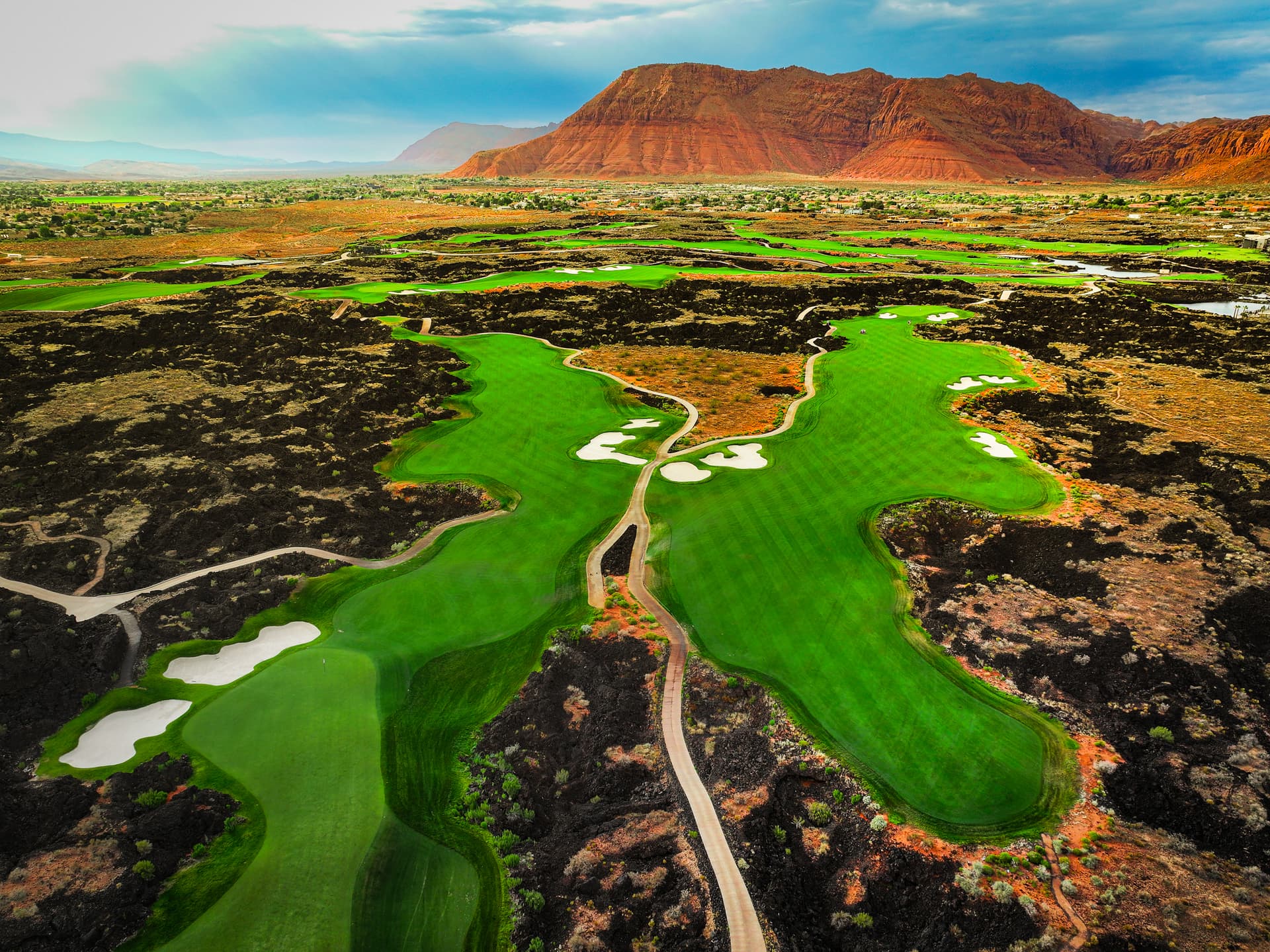
Mix your course rotation — pair a bucket-list round like Sand Hollow with value-friendly options to balance the budget.
Step 4: Build Your Course Rotation
The biggest mistake in group trip planning is overloading the schedule. Two rounds per day is the maximum for most groups. 36 holes in desert heat with a lunch break is a full day. Three rounds means your last round starts at 3 PM and finishes in the dark, or your group is dragging by hole 12 of round two.
Mix Course Difficulty
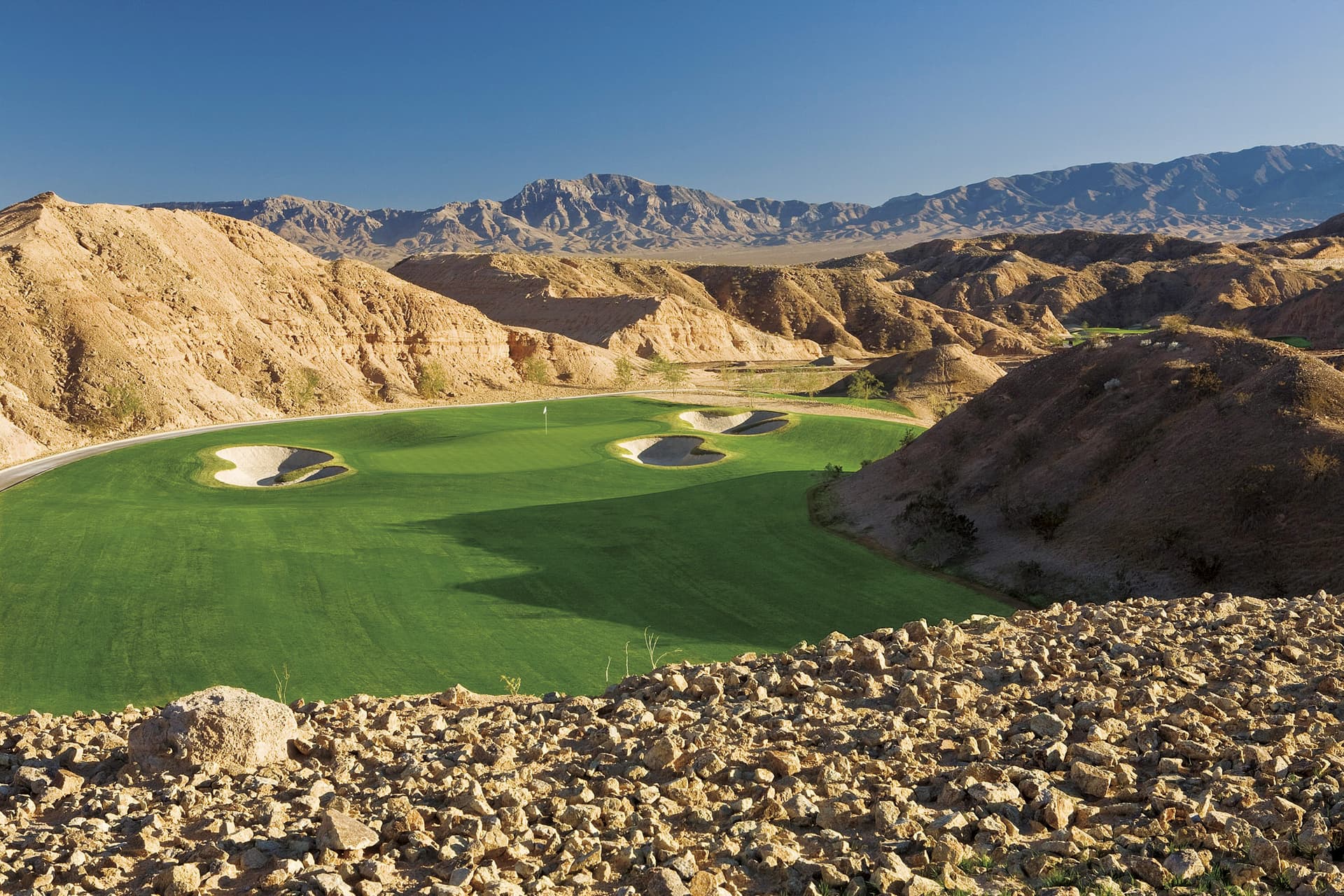
Alternate between challenging and forgiving courses. If you play Wolf Creek (slope 154) on Day 1 morning, follow it with Palms or CasaBlanca — flatter, more forgiving tracks where the group can recover. Save your second-hardest course for the last morning when everyone is rested and competitive.
Sample 4-Day Mesquite + St. George Rotation
| Day | Morning Round | Afternoon | Evening |
|---|---|---|---|
| Day 1 | CasaBlanca (warm-up) | Oasis Palmer or 9 at Coyote Willows | Casino night at CasaBlanca |
| Day 2 | Wolf Creek (bucket list) | Rest / pool / spa | Steak dinner, poker night |
| Day 3 | Sand Hollow (drive to St. George) | Coral Canyon or Copper Rock | St. George dining |
| Day 4 | Conestoga or Entrada (finale) | Depart | — |
Step 5: Handle the Money
Money is the number one source of group trip friction. Establish the payment structure early and stick to it. The two main approaches:
Option A: All-Inclusive Per Person Price
One flat rate covers lodging, green fees, and cart fees. Everyone pays the same amount regardless of which room they get. This is the simplest and most popular option for buddies' trips. A trip planner can quote this as a package — you collect from the group and make one payment.
Option B: Itemized Split
Break out lodging, golf, and meals separately. People who skip a round don't pay for it. This works better for mixed groups where some people play every round and others play two out of five. More tracking, but fairer for uneven participation.
💡 Pro Tip
Collect deposits early — at least 60 days before the trip. Nothing derails group planning faster than two people dropping out the week before because they never committed financially. A $200-$300 non-refundable deposit per person locks in commitment.
Step 6: Manage the Group Dynamics
Every group has mixed skill levels. The goal is making sure the 5-handicap and the 25-handicap both have fun. Here's what works:
Tee Selection
Encourage everyone to play the tees that match their game. Nobody is impressed by the 20-handicap hitting from the tips and shooting 115. Most courses have 4-5 tee options specifically so groups can mix ability levels in the same foursome without slowing play.
Formats That Keep Everyone Engaged
Scramble formats are the great equalizer — the 25-handicap contributes as much as anyone when the team takes the best shot. For competitive rounds, use a handicapped format like net best ball or a Stableford points system. Avoid straight stroke play unless your group is within 5-6 strokes of each other.
Side Games
Nassau, skins, closest-to-the-pin on par 3s, longest drive on designated holes — side games keep the energy up for all 18 holes. Set stakes at a level everyone is comfortable with. A $5 Nassau is fun for everyone; a $50 Nassau makes the higher handicaps not want to play.
Step 7: Don't Overlook the Non-Golf Time
The best group trips build in downtime between rounds. Desert golf destinations offer plenty: casino gambling in Mesquite, Zion National Park day trips from St. George, spa treatments, ATV tours, steakhouse dinners, and lazy pool afternoons at the rental. Plan one rest period per day where there's no tee time and people can do their own thing.
Step 8: Use a Trip Planner (or DIY Smart)
Booking everything yourself is possible but time-consuming. You're calling multiple courses for group rates, comparing lodging options, coordinating tee times across 3-4 courses, and handling cancellations and changes. A golf trip planner handles all of this and often gets better rates because of volume relationships with courses and properties.
What a trip planner does that you probably can't: negotiate group discounts, hold tee times while you finalize headcount, rebook around weather, swap courses if one is under maintenance, and adjust lodging if your group size changes. The service is typically free to the group — the planner earns commission from the courses and lodging.
The Group Golf Trip Planning Checklist
| Timeline | Action Items |
|---|---|
| 6-8 Months Out | Set dates, confirm group size, choose destination, collect deposits |
| 4-6 Months Out | Book lodging, request tee times, lock course rotation |
| 2-3 Months Out | Final headcount, balance payments, set daily itinerary |
| 2-4 Weeks Out | Confirm all reservations, share itinerary with group, assign foursomes |
| Day Before | Arrive, check in, quick 9 or range session, group dinner |
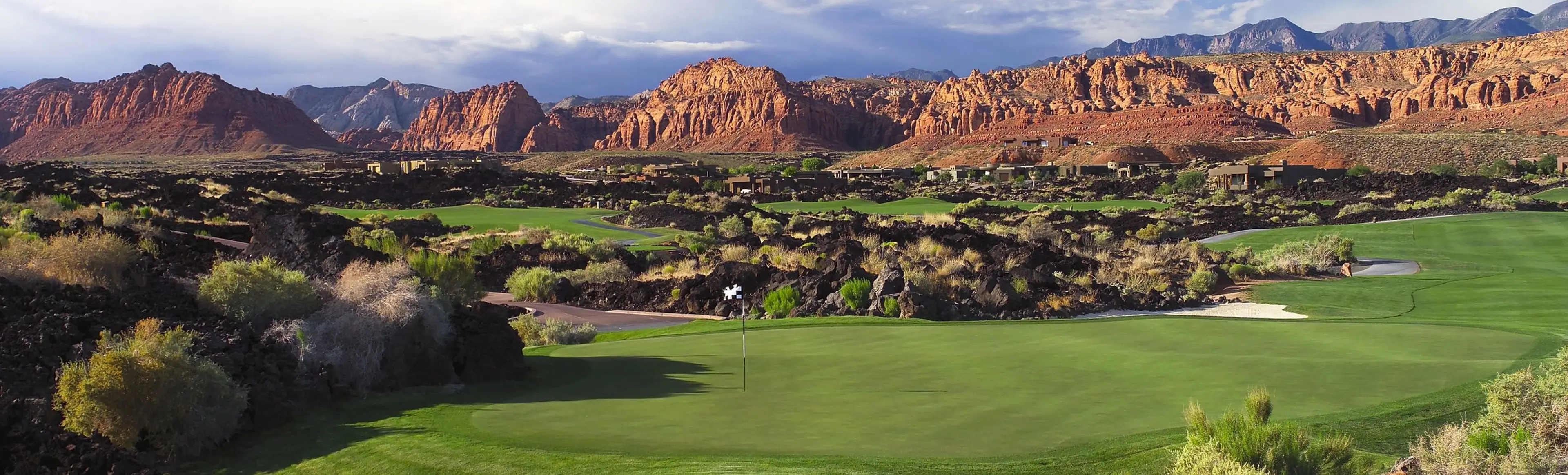
From 4-player buddies trips to 54-player corporate outings — we handle tee times, lodging, and logistics so your group can focus on golf.
Frequently Asked Questions
What's the ideal group size?
The sweet spot is 8-16. This fills 2-4 foursomes, fits comfortably in one vacation rental, and keeps logistics manageable. We handle groups from 4 to 54 — larger groups just need more tee time coordination and may split across properties.
How far in advance should we book?
For peak season (Feb-May, Oct-Nov) and groups of 12+, book 8-12 weeks out. Smaller groups can often book 4-6 weeks ahead. Summer has the most availability. Weekend tee times fill faster than weekdays.
Can you handle everything — tee times, lodging, all of it?
That's exactly what we do. Tell us the headcount, dates, budget, and preferences. We build the complete package — courses, lodging, dining recommendations, activity suggestions — and send one quote. One phone call can finalize it all.
What if skill levels vary widely?
Every course has 4-5 tee sets. Play scramble format for at least one round so everyone contributes. Courses like Coral Canyon and Falcon Ridge are especially forgiving for mixed-ability groups.
House or hotel for groups?
House, almost always. A private rental with pool, hot tub, and communal space keeps the group together between rounds — that's where the real bonding happens. Per-person cost is usually less than a hotel. See our Hotel vs. Vacation Rental comparison.
Ready to Plan Your Group Golf Trip?
Tell us your group size, preferred dates, and how many rounds you want. We'll build a custom itinerary across Mesquite and St. George — courses, lodging, tee times, and pricing all handled.
📖 Real Trip Example
24 players, 3 nights: Wolf Creek + Sand Hollow across two mansions.
Read the full trip story →
Mike Milligan
A native of Santa Rosa, CA, Mike has been a part of the golf industry within the Reno/Lake Tahoe area and beyond for over 30 years.